
Window balance decision guide
Channel balance replacement and block-and-tackle identification
Channel balances are often described with block-and-tackle terminology. This page keeps that terminology together because the replacement decision still depends on the same physical balance and its attachments.
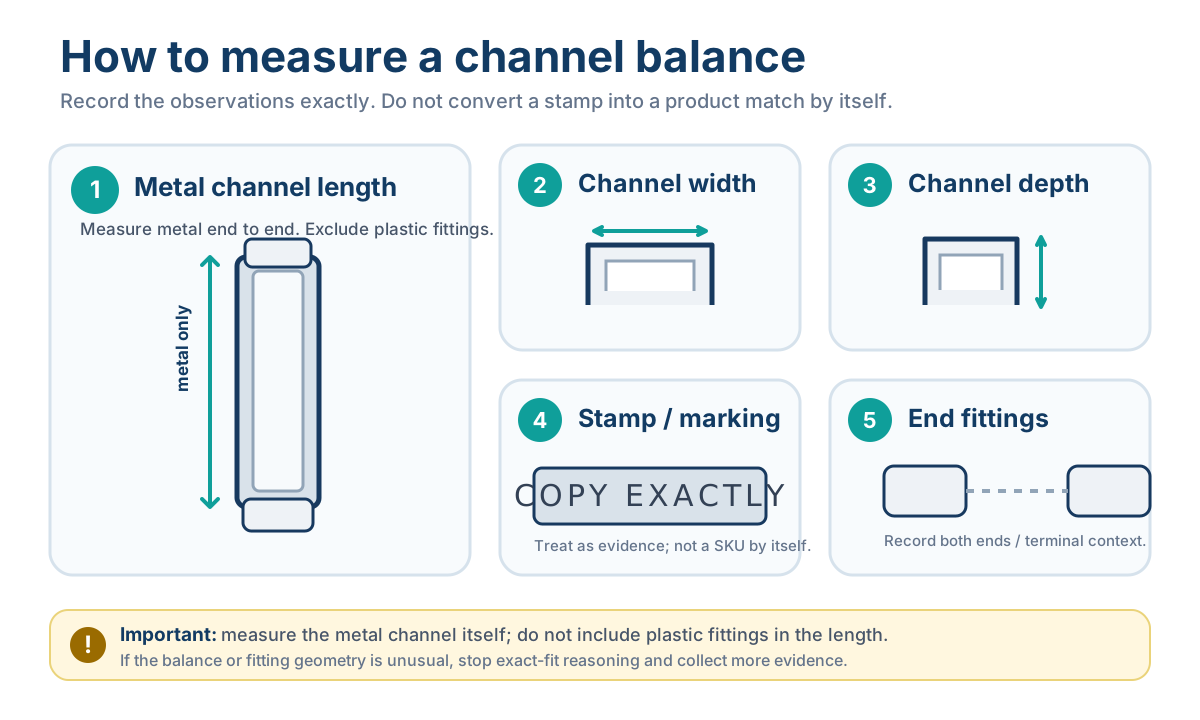
Identification and fit check
First identify the hardware family, then collect the measurements that affect fit. A likely family is not the same as a confirmed replacement.
Confirm the family before matching a part
A rigid metal channel supports a channel-balance classification, but the channel alone does not establish exact fit. The end/terminal hardware and window configuration matter too.
Channel balance measurement checklist
- Record the metal channel length and unit.
- Record channel width and depth.
- Copy the observed stamp or marking exactly; do not silently convert it into a SKU.
- Record tilt or non-tilt state.
- Describe the top/bottom guide or terminal and any pivot relationship that affects installation.
Do not assume a dimensional tolerance unless a rights-cleared technical rule explicitly supports it.
Before you shop
If the family is supported but fit-critical details are incomplete, the safe commercial state is category-level browsing only. Exact compatibility should remain unconfirmed until the required measurements and attachment relationships agree.
Not sure it is a channel balance?
Return to the identification guide and re-check the visible hardware form.