
Window balance decision guide
Window balance shoe replacement: identify the pivot shoe and mating system
A balance shoe or pivot-lock shoe works as part of a mating system. Measure the shoe and identify what it mates with before treating a similar-looking replacement as compatible.
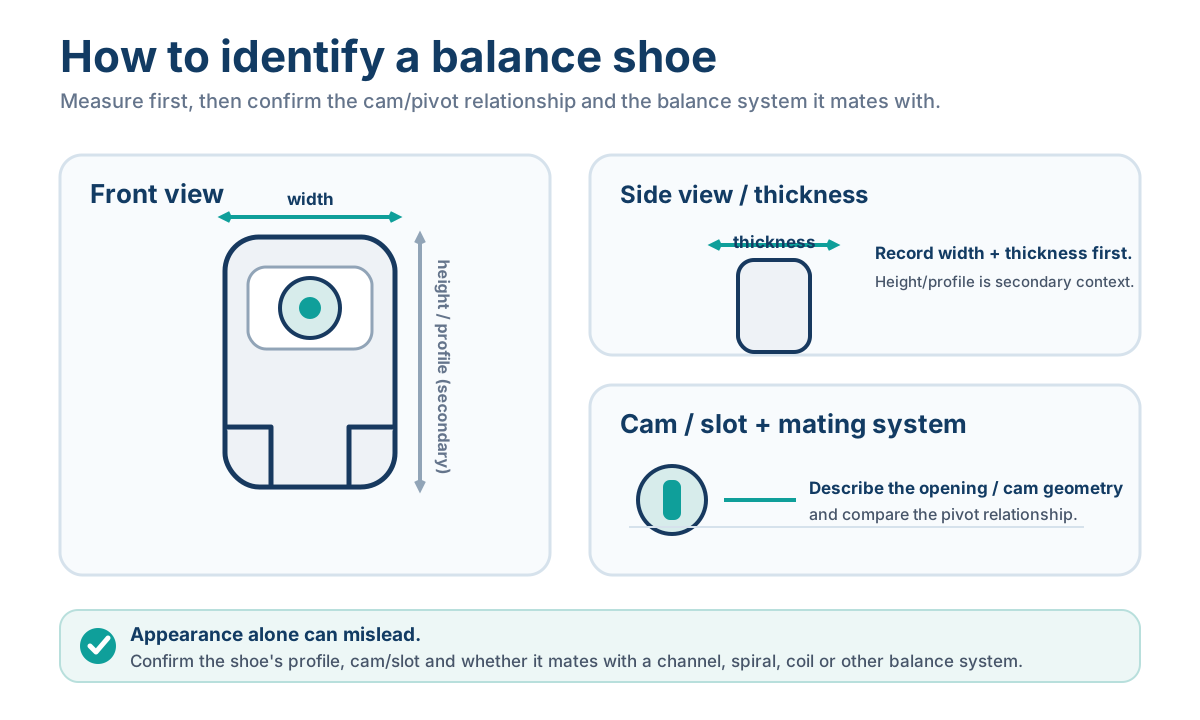
Identification and fit check
First identify the hardware family, then collect the measurements that affect fit. A likely family is not the same as a confirmed replacement.
What you likely have
A pivot or balance shoe usually connects sash pivot hardware to a balance system. Family identification helps narrow the search, but it does not confirm the exact shoe.
Balance shoe measurement checklist
- Record shoe width and thickness with units.
- Describe the shoe profile and cam/slot geometry from direct observation.
- Identify the mating balance system: channel, spiral, coil, or other.
- Compare the mating pivot relationship; do not rely on front-view appearance alone.
- Stop exact-fit reasoning if a fit-critical relationship is unknown or contradictory.
No default dimensional tolerance and no silent shoe-to-SKU inference is assumed.
Why similar-looking shoes can still differ
Small differences in thickness, cam shape, profile or mating hardware can change fit. Treat a visual match as a clue that must be confirmed by measurements and system context.
Before you shop
When the shoe family and mating system are supported, category-level merchant routing can be appropriate. Exact-product routing remains disabled until stronger rights-cleared fit evidence is available.